City Center Massacre
Mr. MercedesThe City Center Massacre was a deliberate vehicle attack on people gathered for a job fair, carried out by Brady Hartsfield in a stolen Mercedes. Eight people were killed and many more wounded. Its importance extends beyond the immediate destruction: the attack becomes a lasting source of grief and guilt, the focus of K. William Hodges’s renewed investigation, and a measure of the mass violence Brady later seeks to surpass.
Background and Setting
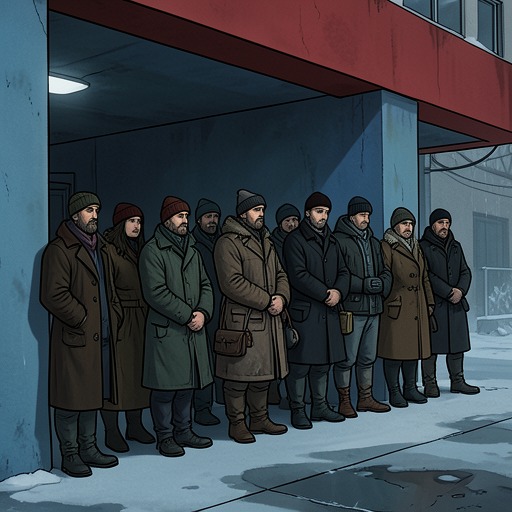
The attack took place at City Center, where job-seekers had gathered before the doors opened. At least two dozen people were already waiting outside the auditorium, many seated, when Brady arrived. Yellow barriers and DO NOT CROSS tape formed a narrow, winding queue, compressing the crowd into a confined space. The people at the front had little room to escape when the car came toward them; the queue’s arrangement intensified the danger rather than offering a clear path out.
Brady’s access to the vehicle was part of a longer pattern of theft. For nearly two years, he used a homemade signal-capturing device to take cars’ key codes and enter vehicles for cash and valuables. He had found a spare key to Olivia Trelawney’s Mercedes in the glove compartment, stored with the owner’s manual and registration. Though his first impulse was to take the car for a joyride, he left it untouched, sensing that it might serve a larger purpose. It ultimately became the instrument of the City Center attack.
The Attack
Brady accelerated toward the most densely packed part of the job-fair crowd, where the barriers hemmed people in. Those at the rear could flee; people nearer the doors could not. In the ensuing rush, the crowd was thrown into confusion, and some people fell as others tried to get away. Augie, caught in the crush, was pushed off balance and then forward. He saw the Mercedes emerge through the fog before a tire filled his field of vision; the narrative cuts off at the moment of impact.
The eventual toll was eight dead and many wounded. Brady later acknowledged that he had expected a substantial chance of being caught but had not cared. He said that after the attack he continued to relive its consequences, and that learning a baby had also been killed made the reality of what he had done unmistakable to him. The contrast between his indifference beforehand and his later account of shame and remorse gives the massacre a continuing psychological aftermath without diminishing the deliberate nature of the act.
The Attack’s Afterlife
The massacre remains present in the investigation through both public records and private recollection. A newspaper photograph of the abandoned Mercedes’s steering wheel showed a yellow smiley face wearing dark glasses, pasted over the manufacturer’s emblem. The image connected the crime to the taunting persona that Brady would later use in a letter to K. William Hodges, boasting about the killings and asking whether Hodges had thought of him at his retirement ceremony. The crime’s public evidence thus became part of a direct provocation aimed at the retired detective.
The victims also persist in the memories of those who knew survivors. Janey Patterson recalled seeing her sister Olivia Trelawney not long after the attack, when Olivia was in terrible shape and said the police were hounding her. Olivia later described hearing the dead baby, whom she called Patricia, crying at night. Her account presents the massacre not as a concluded episode but as a trauma that continues to shape her life after the immediate danger has passed.
For Hodges, the case is the one he most wanted to discuss when he retired. He had earlier dismissed concerns about Olivia as he and Pete Huntley had dismissed another warning, and later wondered whether paying attention might have changed what followed. He could not know whether different action would have saved Janey, but the unanswered question became a source of sleeplessness. The massacre therefore marks both the public failure to stop Brady and the private burden of uncertainty borne by people who believe they might have acted differently.
A Precedent for Further Violence
Brady’s later plans show that City Center was not an isolated act in his imagination. While working at Discount Electronix, he considered using a suicide vest to assassinate President Barack Obama at a rally, imagining a spectacular death and the fame it might bring. The idea passed as his attention shifted to a service call, but it reveals the continuing attraction of mass violence and notoriety. Later, as he prepared an explosive device for the Mingo Auditorium, he measured the potential number of victims against the eight killed at City Center and hoped for a higher toll.
That comparison shapes how Hodges and his allies understand the later threat. Hodges recognizes that another crowd could be attacked in the same way and rejects the idea that the danger belongs only to the people directly involved in the investigation. Brady, meanwhile, wants Hodges alive to remember the coming violence. The earlier massacre supplies both men with a grim frame of reference: for Hodges, a warning that must be acted upon; for Brady, a precedent to exceed.
Narrative Significance
The novel’s opening attack establishes how ordinary desperation can be turned into a vulnerable gathering place: people seeking work wait together at a tightly organized entrance, while the killer exploits the crowd’s confinement. The event’s consequences then spread through the narrative in different forms—an abandoned car and its emblematic smiley face, a taunting letter, survivors’ grief, Hodges’s doubts, and Brady’s escalating plans. By returning to City Center as memory, evidence, and threat, the story makes the massacre the measure of the violence still to come.
The Attack’s Afterlife
The massacre remained present in the investigation through public records and private recollection. A newspaper photograph of the abandoned Mercedes’s steering wheel showed a yellow smiley face wearing dark glasses, pasted over the manufacturer’s emblem. The image connected the crime to the taunting persona that Brady Hartsfield later used in a letter to K. William Hodges, boasting about the killings and asking whether Hodges had thought of him at his retirement ceremony. The crime’s public evidence thus became part of a direct provocation aimed at the retired detective.
The victims also persisted in the memories of people close to those affected. Janey Patterson recalled seeing her sister Olivia Trelawney not long after the attack, when Olivia was in terrible shape and said police were hounding her. Olivia later described hearing the dead baby, whom she called Patricia, crying at night. Her account presents the massacre not as a concluded episode but as a trauma that continued to shape her life after the immediate danger had passed.
For Hodges, the case was the one he most wanted to discuss when he retired. He had earlier dismissed concerns about Olivia, as he and Pete Huntley had dismissed another warning, and later wondered whether paying attention might have changed what followed. He could not know whether different action would have saved Janey, but the unanswered question became a source of sleeplessness. The massacre therefore marks both the failure to stop Brady and the private burden of uncertainty borne by people who believe they might have acted differently.
A Precedent for Further Violence
Brady Hartsfield’s later plans show that the City Center Massacre was not an isolated act in his imagination. While working at Discount Electronix, he considered using a suicide vest to assassinate President Barack Obama at a rally, imagining a spectacular death and the fame it might bring. A service call displaced the idea, but the episode shows how readily mass violence and notoriety entered his thoughts. Later, as he prepared an explosive device for the Mingo Auditorium, he compared the possible toll with the eight killed at City Center and hoped to surpass it.
That comparison shaped how K. William Hodges and his allies understood the later threat. Hodges recognized the possibility of another attack on a crowd and refused to treat the danger as a matter only for those already involved in the investigation. Brady, for his part, wanted Hodges alive to remember the violence to come. The earlier massacre thus became a grim point of reference: a warning Hodges felt compelled to act on, and a precedent Brady intended to exceed.
Narrative Significance
The City Center Massacre is the novel’s defining precedent for violence against a gathered crowd: job-seekers assemble in an orderly queue, but that same confined arrangement leaves many of them with no clear escape when Brady Hartsfield attacks. Its consequences recur as evidence, memory, guilt, and threat. The smiley face on the abandoned Mercedes turns a detail of the crime into a signature; survivors and their families continue to carry its effects; and K. William Hodges’s unresolved doubts make the investigation personal as well as professional. When Brady later imagines a higher death toll, City Center becomes the measure he intends to surpass, binding the opening attack to the danger that follows.